The two rats that cause problems in Waco homes are roof rats and Norway rats — and where you find the signs usually tells you which one you have. Noise and droppings overhead, in the attic or along the roofline, point to roof rats; burrows and droppings down low, at the foundation or in the crawl space, point to Norway rats. This guide walks through the differences in plain terms, so you know what you are dealing with before you set a trap or seal a hole.
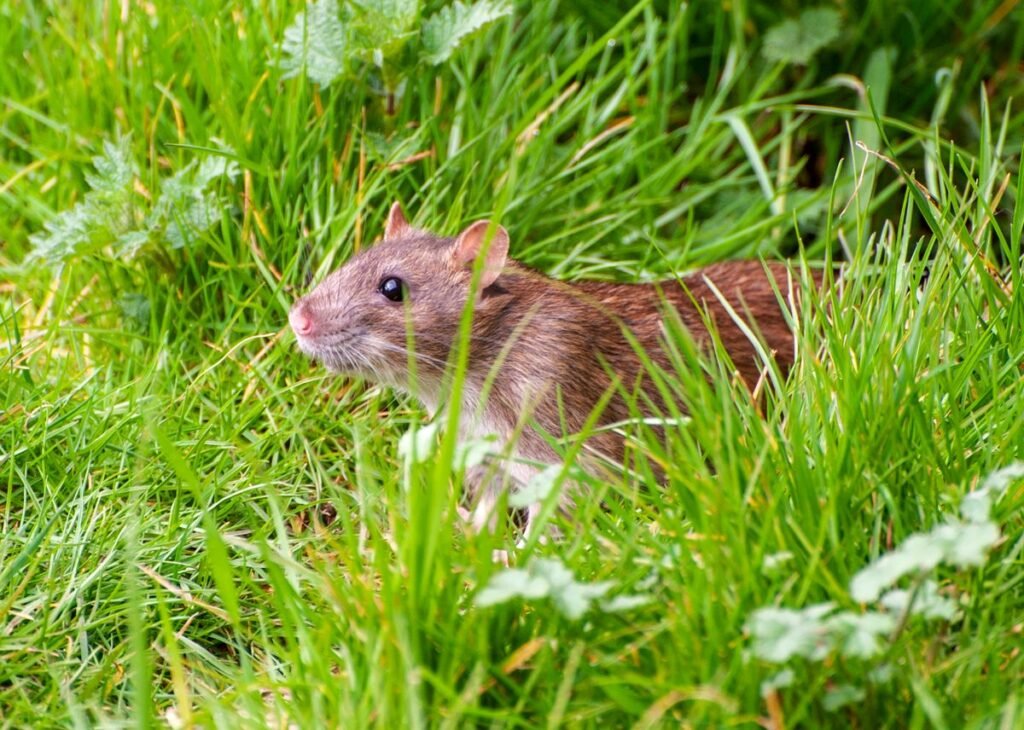
Roof Rats: The Attic Rats
Roof rats are the attic rats: if the activity in your home is overhead — scratching in the attic at night, droppings along rafters, or gnawing near the roofline — you almost certainly have roof rats. They are sleek, slim rats with large ears, large eyes, and a pointed face, and their tail is longer than their head and body combined. Built for climbing, they travel along fences, utility lines, and tree limbs to reach your roof, then slip into the attic through small gaps at the roofline.
The signs are up high, too. Roof rat droppings are about 1/2 inch long and spindle-shaped, with pointed ends, and you will usually find them in the attic, on top of wall plates, or near stored items. Look for gnawing around soffits, vents, and roofline trim, plus chewed wires and insulation inside the attic. In Waco, roof rats commonly use overhanging oak branches as a bridge to the roof — if limbs hang over your roofline, that is often how they are getting in.
Norway Rats: The Ground Rats
Norway rats are the ground rats: if the signs are down low — burrows along the foundation, droppings in the crawl space, or dark grease marks at ground level — you almost certainly have Norway rats. They are stocky, heavy-bodied rats with a blunt nose, small ears, and small eyes, and their tail is shorter than their head and body combined. Unlike roof rats, they are poor climbers and spend their time on the ground.
Norway rats are strong diggers. They burrow in soil along foundations, under concrete slabs and clutter, and into crawl spaces, where they nest and travel along the ground. Their droppings are about 3/4 inch long and capsule-shaped, with blunt, rounded ends — noticeably bigger than roof rat droppings. Fresh burrow entrances by the foundation, worn paths through the yard, and droppings at ground level are the classic Norway rat picture in Waco homes.
Side-by-Side: The Quick Comparison
The quickest way to tell the two rats apart is to compare the signs side by side:
| Trait | Roof Rat | Norway Rat |
|---|---|---|
| Size and build | Sleek and slim, built for climbing | Stocky and heavy-bodied |
| Tail | Longer than the head and body combined | Shorter than the head and body combined |
| Ears and eyes | Large ears and large eyes | Small ears and small eyes |
| Droppings | About 1/2 inch, spindle-shaped with pointed ends | About 3/4 inch, capsule-shaped with blunt ends |
| Where found | Attic, roofline, and up high | Foundations, crawl spaces, and ground level |
| Climbing | Excellent climber — uses branches, fences, and lines | Poor climber — mostly stays on the ground |
Why It Matters Which Rat You Have
It matters because the fix that works depends on the species: traps and sealing aimed at the wrong level of the house will miss the rats entirely. For roof rats, traps belong up high, along attic runways, and the entry points to seal are at the roofline — gaps, vents, and overhanging branches. For Norway rats, traps belong at ground level, and the entry points are foundation gaps, burrows, and crawl space openings.
That is why our rat control service in Waco starts with species identification — its roof rat and Norway rat sections show how the plan changes for each species. And whichever rat you have, lasting results come from rodent exclusion: sealing the actual entry points with chew-proof materials so new rats cannot follow the old ones in. Guessing the species usually means sealing the wrong holes while the colony carries on.
What to Do Next
The next step is a proper inspection, so the species is confirmed before any trapping or sealing begins. Book a rodent inspection in Waco and we will check your attic, roofline, foundation, and crawl space, identify which rat you have, and show you exactly where it is getting in. If rats are already living in the house, our rat removal service gets them out and the entry points sealed behind them.
Still not sure which rat you have? Call Waco Rodent Pros at (254) 720-9235 — we will help you read the signs and work out the right next step for your home.